How much does a fuse box replacement cost in 2026?
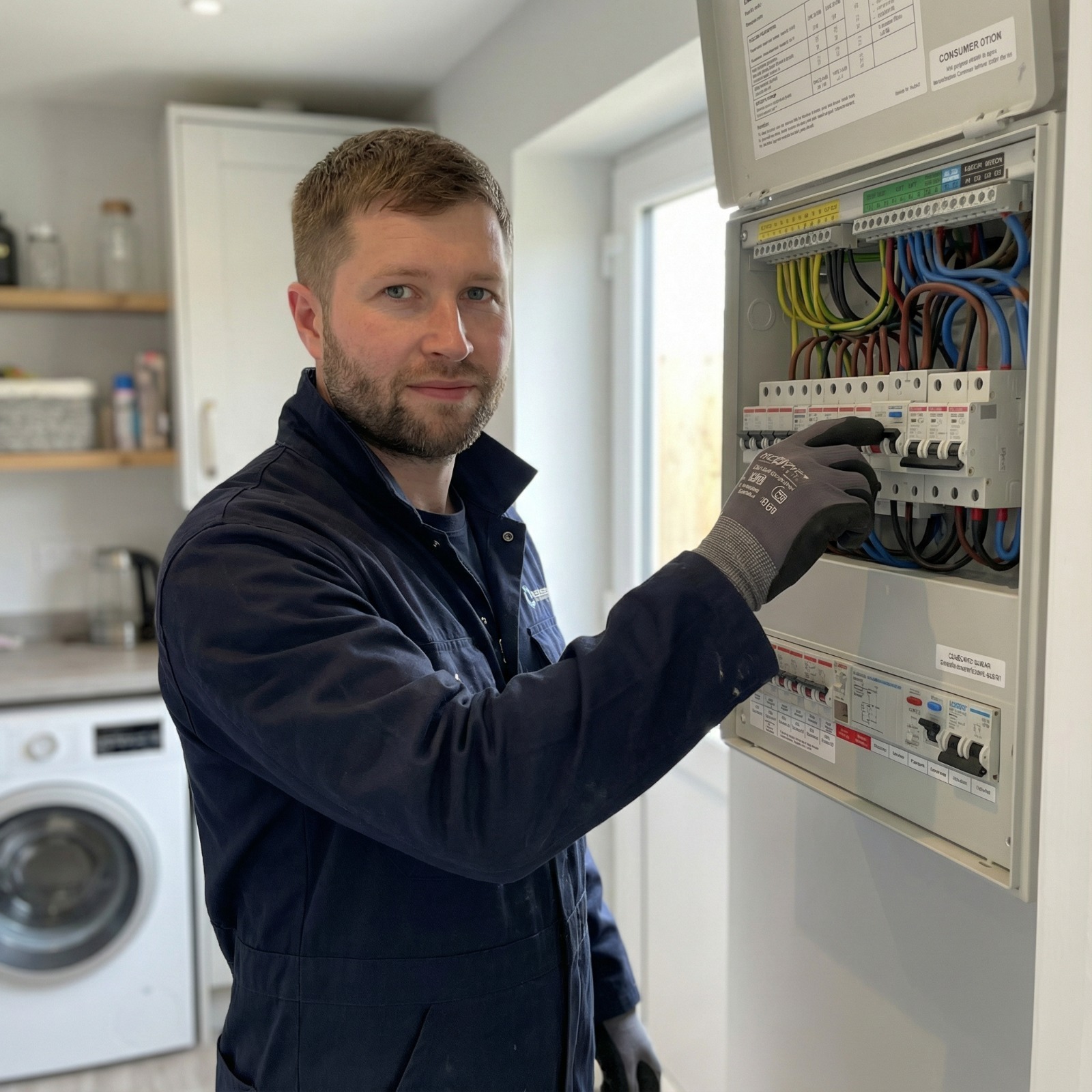
Written by B.P.H. Electrics
NAPIT-registered, Part P electrician. Family-run, based in Slough, covering Slough, Windsor, Maidenhead, Reading and the wider Thames Valley.
If your fuse box is looking its age, the first question is almost always the same: what's this going to cost me? It's a fair question, and one that's surprisingly hard to get a straight answer to online. So here's an honest guide to what a fuse box replacement, properly called a consumer unit upgrade, typically costs in 2026, and, just as usefully, what makes one job cost more than another.
A quick note before the numbers: we can't put a firm price on your job without seeing it, and any electrician who quotes you a fixed figure over the phone without knowing what they're dealing with is guessing. The ranges below are typical UK prices, gathered from national cost guides... not a B.P.H. Electrics quote. Think of them as a sanity check, not a bill.
The short answer
For a straightforward replacement, most homeowners in 2026 are looking at somewhere in the region of £500 to £1,200, all in. That figure usually covers the new unit itself, the labour, full testing, the electrical certificate, and notifying Building Control... more on all of that below.
Where you land in that range depends mostly on the type of board and the state of what's already there:
A standard dual-RCD board tends to sit at the lower end... roughly £500 to £800.
A full RCBO board (the better setup, where every circuit has its own individual protection) is usually £800 to £1,200.
Jobs that need extra work (more circuits, poor earthing, a tricky location) can run higher, sometimes past £1,500.
Those are national figures. In the South East, where we're based, prices tend towards the upper half of the range rather than the bottom, simply because labour costs more here than in some other parts of the country.
What you're actually paying for
A consumer unit replacement isn't just swapping a box on the wall. When it's done properly, the price includes several things that are easy to overlook:
The unit itself... a modern consumer unit from a reputable brand, not the cheapest thing available.
The labour to disconnect the old board, fit the new one, and terminate every circuit correctly.
Full testing of the installation once it's in... this is where a lot of the skilled time goes.
An Electrical Installation Certificate, which you'll want for your insurer and for when you eventually sell.
Building Control notification. Replacing a consumer unit is notifiable work under Part P of the Building Regulations. Because we're NAPIT registered and Part P certified, we can self-certify the work and handle that notification for you... you don't need to involve the council or pay a separate inspection fee.
If a quote looks suspiciously cheap, it's worth asking which of those are actually included. A price that leaves out the certificate or the notification isn't really a like-for-like comparison.
What pushes the price up (or down)
No two homes are the same, and a few things make a genuine difference to the final figure:
The number of circuits. A small flat with six circuits is a quicker, cheaper job than a four-bedroom house with a dozen. More circuits means a bigger board and more to test and terminate.
Dual-RCD versus full RCBO. On an older dual-RCD board, one fault can take out half your house at once. With a full RCBO board, each circuit is protected on its own, so a fault only knocks out the affected circuit. It costs a bit more up front and, in our view, it's usually worth it... but it's your call, and we'll explain both.
The state of your earthing and bonding. This is the big one. Modern regulations require your electrical system to be properly earthed and bonded... the green-and-yellow cables you'll sometimes see clamped to your gas and water pipes. Older homes often fall short here, and if yours does, that work has to be brought up to standard as part of the job. It's not an upsell; it's a safety requirement, and a good electrician will flag it before starting, not spring it on you halfway through.
Whatever the old board is hiding. Occasionally, once the cover comes off, we find existing wiring that isn't safe to simply reconnect. If a replacement turns into a wider conversation about ageing wiring, it's worth reading up on when a full rewire becomes the more sensible option... sometimes it's better value to do it all at once than to keep patching.
Do you actually need one yet?
Cost matters, but so does timing. You don't necessarily need a new consumer unit just because yours is old... but there are some clear prompts. Old-style boards with rewireable fuses (the ceramic ones you rewire with fuse wire), boards with no RCD protection at all, signs of scorching, or a fuse box that trips repeatedly are all worth taking seriously.
If you're unsure whether yours is genuinely due for replacement or just looks dated, the honest answer is to get it checked before spending anything. An inspection and testing report (EICR) gives you a professional assessment of the whole installation, so you're making the decision on evidence rather than a hunch... and if the board is fine, we'll tell you so.
How to get a real figure for your home
The ranges above will tell you whether a quote you've been given is roughly sensible. But the only way to know what your job costs is to have someone look at it.
We give free, no-obligation quotes, and for a fuse box replacement we can often give you a good idea from a few clear photos of your existing board and the surrounding meter setup... which saves you a visit and us a journey. If it turns out extra work is needed, you'll hear about it before we start, not after.
If your fuse box is worrying you, or you just want to know where you stand, read more about our fuse box replacement service or give us a call on +44 7722 132736. We're a family-run electrical business based in Slough, covering Windsor, Maidenhead and the surrounding area, and we're happy to give you a straight answer.
Got an Electrical Job in Mind?
Friendly, fully-qualified and local. Call B.P.H. Electrics for a straight answer.
Call +44 7722 132736